Solar Power or Wind Power? Reading the Difference Between Two Energy Sources
Solar power or wind power depends on local sun, wind, land and grid conditions. Learn how to compare where each source can fit before choosing.
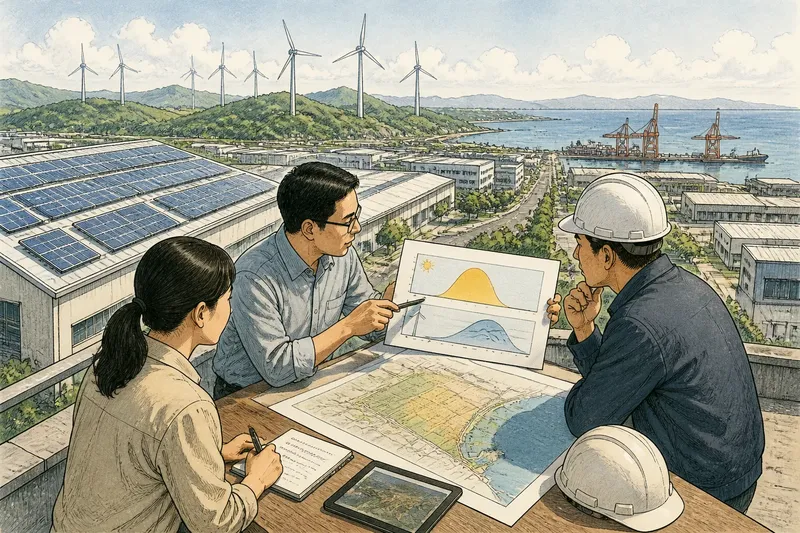
The most common mistake in comparing solar power or wind power is treating annual output as the whole decision. That shortcut can obscure the costly question: whether electricity arrives when and where a community needs it. Start with local conditions, then compare the shape of generation, suitable sites and the work needed to connect each source.
Start with the question the project must answer
Before looking at panels or turbines, define the decision. A household choosing rooftop equipment has different constraints from a city assessing a coastal power project. A factory seeking a direct supply contract has different priorities again. The comparison is useful only when it matches the scale and purpose of the proposal.
Write down the intended use in plain terms: supplying a building, adding power to a local grid, or diversifying a larger electricity system. Note whether the goal is to provide power during daylight, complement other sources, or make use of a particular site. These are distinct aims, not interchangeable sales phrases.
Then establish the boundaries. Is the decision about a single installation, a portfolio of projects, or the electricity system as a whole? Is the proposed site already selected? Are there nearby homes, farms, roads, protected areas or transmission lines? A clear boundary prevents a tidy comparison from quietly changing scale halfway through.
Compare when the sun and wind are available
Solar panels generate electricity when sunlight reaches them. Output generally rises in brighter conditions and falls at night, while cloud cover, haze, shading and the panel’s orientation affect the amount available. The daily pattern is comparatively easy to picture: a strong daytime contribution, with no direct solar generation after dark.
Wind turbines generate electricity when wind speeds fall within the operating conditions of the equipment. Wind may be stronger at night, in a different season or at a different time of day from peak sunlight. It can also ease or change direction, so wind generation does not follow a fixed daily schedule.
Neither source is constant. The useful comparison is not “steady versus unreliable,” but how each source’s variable output lines up with demand and with other generators. A region with substantial afternoon electricity use may value solar’s daytime profile. A system with evening demand may find wind useful if local wind patterns tend to contribute then. Those are questions for local records, not assumptions to carry across a continent.
Consider more than a typical day. Seasonal rain, monsoon cloud, dry-season heat, seasonal wind shifts and local terrain can change the pattern. Conditions in a coastal district may differ from those inland or on a plateau. A proposal should be assessed against local weather and demand records at a relevant time scale; a regional average can hide the feature that matters most at the proposed site.
Match each source to the place it can use
Solar can use rooftops, parking structures, industrial land and other open areas. Rooftop systems can put generation close to a building’s use, but roof angle, shade, condition and available space matter. Larger solar arrays need suitable ground and a route to connect with the grid. In dense Asian cities, rooftops may be valuable, but competing uses and building design limit what they can host.
Wind projects need locations with a suitable wind resource and room for turbines, access and grid connections. Onshore wind may suit exposed ridges, plains or coastal areas, subject to land use, settlement patterns and environmental considerations. Offshore wind can use marine wind resources, but it requires a suitable coast, substantial infrastructure and careful coordination with fishing, shipping and other sea uses.
The map should include people and existing activities, not just the colored resource layer. A sunny site may be important farmland or habitat. A windy ridge may be difficult to reach or close to settlements. A coastal project may compete with established livelihoods. These constraints do not make a source inherently unsuitable; they determine whether a particular project makes sense and what trade-offs it would create.
Check what happens after generation
Electricity must get from the project to users. A rooftop installation may connect within a building or local distribution network, while a large solar or wind project may require transmission capacity. If the network cannot accept power at the times it is produced, the project’s resource advantage may not translate into useful supply.
Storage can shift some electricity to a later period, but it adds equipment, cost and operating considerations. Grid connections, flexible demand, hydropower and other generators can also help balance changing supply, depending on what is available locally. None is a universal substitute for choosing a suitable site and understanding the generation pattern.
When comparing proposals, ask who is responsible for connection work and how the project fits the wider system. A small installation may be straightforward to connect in one location and difficult in another. For a large project, the timing and route of transmission can shape the decision as much as the resource itself.
Use a short comparison before choosing
- Define the purpose. Decide whether the proposal serves one building, a local network or the wider grid.
- Check local availability. Compare sunlight and wind patterns across relevant seasons, not only on a favorable day.
- Match output to demand. Note when users need electricity and how each source’s likely generation aligns with that need.
- Inspect the site constraints. Consider shade, roof suitability, land use, access, nearby communities and environmental sensitivities.
- Review grid access. Find out whether the existing network can accept and deliver the proposed electricity.
- Consider the wider mix. Ask what storage, flexible demand or other generators could complement variable output.
- Compare the project boundary. Make sure both options are being assessed at the same scale and for the same purpose.
Say a coastal industrial district wants to add renewable electricity for daytime operations. It identifies a broad factory roof that receives open sunlight and a nearby exposed site that may have useful wind. The planning team compares seasonal resource and operating demand, then checks roof condition, land access and grid capacity. If the roof is suitable and the network can accept its output, rooftop solar may fit the stated purpose; if the wind site offers a better match and can be connected responsibly, wind may be the stronger candidate. The observable result is a decision grounded in the district’s actual constraints, not a universal winner.
Which source fits the question you are asking?
Is solar power more predictable than wind power?
Solar has a regular day-and-night pattern, but cloud, haze, season and shading affect output. Wind varies with weather and location, so neither source is constant; the useful distinction is the local pattern over time.
Can solar and wind work together?
They can complement one another if their local generation patterns differ in useful ways. The degree of complementarity depends on site and season, so it should be checked against local weather and demand rather than assumed.
Is rooftop solar always better than a wind project for a city?
No. Rooftops can use space close to demand, while a city may also obtain electricity from wind projects elsewhere through the grid. Roof suitability, network capacity and the wider system determine which option is practical.
What information should a community request before supporting a proposal?
Ask for the proposed site, local resource assessment, expected timing of generation, grid connection plan and account of nearby land or sea uses. Those details make it possible to judge both the project’s fit and its trade-offs.
Spend effort on local evidence, not a universal winner
It is not worth arguing that one technology must always be superior. Nor does a single sunny photograph or a windy afternoon establish a project’s value. The useful work is narrower: verify the local pattern, identify who and what the site affects, and confirm how electricity reaches users.
For a reader comparing solar power or wind power in an Asian city or region, the answer may differ between a shaded urban roof, an inland industrial area and an exposed coast. Read the resource data alongside demand, land and grid information, and keep the project’s purpose fixed. That is enough to turn a broad technology debate into a decision about a real place.